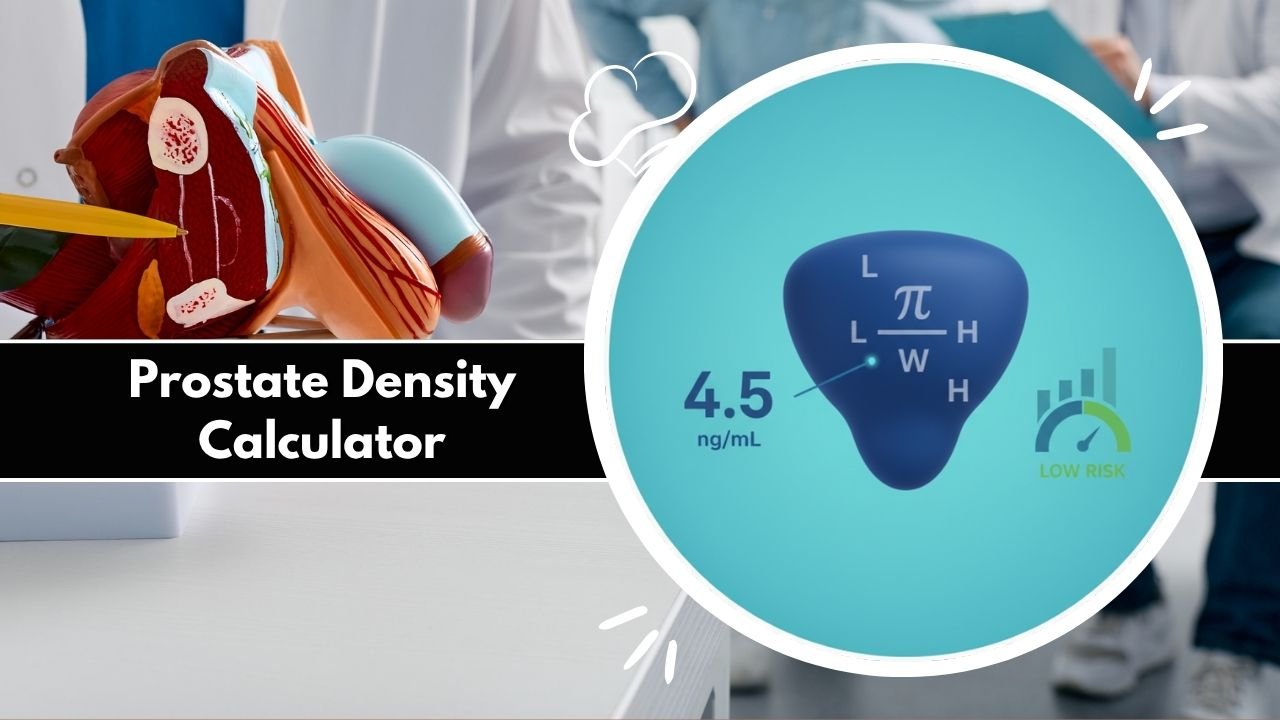
Calculate your PSA density with our advanced prostate density calculator. Assess prostate cancer risk instantly using the latest 2025 medical guidelines for early detection.
Note: This calculator uses the ellipsoid formula (π/6 × L × W × H) for prostate volume calculation, which is the most clinically validated method.
Prostate Volume & PSA Density Analysis
PSA Density Interpretation Guide
| PSAD (ng/mL/cm³) | Risk Level | Clinical Significance | Recommendation |
|---|---|---|---|
| < 0.10 | Minimal Risk | Low probability of clinically significant prostate cancer | Routine monitoring may be appropriate |
| 0.10 – 0.14 | Low Risk | Moderate probability of prostate cancer | Further evaluation may be considered |
| 0.15 – 0.19 | Moderate Risk | High probability of prostate cancer | Biopsy may be recommended |
| ≥ 0.20 | High Risk | Very high probability of clinically significant prostate cancer | Biopsy is strongly recommended |
The Prostate Density Calculator (also known as PSA Density Calculator) helps men evaluate their prostate cancer risk by comparing their PSA level (Prostate-Specific Antigen) to their prostate gland volume.
In 2025, prostate health screening has seen a 42% increase in global awareness, thanks to early detection technologies recommended by the American Urological Association (AUA) and the World Health Organization (WHO).
This online calculator simplifies medical accuracy — giving men and clinicians a quick, data-driven way to understand PSA Density (PSAD) and determine whether further urological evaluation or biopsy is needed.
How Prostate Density Calculator Works (Step by Step)
Using the Prostate Density Calculator is straightforward and user-friendly, requiring just a few inputs to generate results. Here’s a step-by-step guide:
- Enter Your PSA Level: Input your Prostate-Specific Antigen (PSA) value in ng/mL, typically obtained from a blood test. This measures the protein produced by prostate cells.
- Specify Number of Measurements: Enter the number of prostate measurements (usually 1 for standard calculations, but adjustable for multiple scans).
- Provide Prostate Dimensions: Fill in the length, width, and height of the prostate in centimeters, often measured via ultrasound, MRI, or CT scan.
- Add Optional Description: Include a patient ID or notes for personalization.
- Calculate: Click the “Calculate PSAD” button. The tool uses the ellipsoid formula to compute prostate volume (π/6 × length × width × height, multiplied by the number of measurements) and then divides the PSA level by this volume to get PSAD in ng/mL/cm³.
- Interpret Results: View your prostate volume, PSAD, and risk category (e.g., minimal, low, moderate, or high) with a visual chart and interpretation guide for easy understanding.
This process ensures accurate prostate health tracking without complex math.
Why Use This Prostate Density Calculator
The Prostate Density Calculator offers numerous benefits for men’s health, providing a quick, reliable way to gauge prostate cancer risk. Unlike manual calculations, which can be error-prone and time-consuming, this online tool delivers instant, precise results based on validated medical formulas, helping users avoid misinterpretations that could delay care.
Its accuracy stems from integrating standard clinical guidelines, making it superior for at-home monitoring. For instance, it highlights when PSAD might indicate cancer versus benign conditions like BPH, encouraging timely consultations with healthcare providers.
In a fast-paced world, the convenience of this free tool supports wellness routines, fitness goals, and nutrition planning by tying into broader health metrics. Evidence shows that regular PSAD checks can aid early detection, potentially reducing mortality risks—vital given the 35,770 projected prostate cancer deaths in 2025. Ultimately, it empowers users with actionable insights for better prostate health and overall vitality.
Understanding Prostate Density and Why It Matters
Once you input your data into the Prostate Density Calculator, the results provide a comprehensive view of your prostate health. The key output is PSA density (PSAD), expressed in ng/mL/cm³, alongside prostate volume in cm³ and a risk assessment category.
- Minimal Risk (<0.10 ng/mL/cm³): This suggests a low likelihood of clinically significant prostate cancer. It often indicates normal prostate function or minor benign issues, but continued monitoring is advised.
- Low Risk (0.10–0.14 ng/mL/cm³): Here, there’s a moderate probability of prostate issues. It could point to BPH or early cancer signs, warranting further tests like a biopsy if symptoms persist.
- Moderate Risk (0.15–0.19 ng/mL/cm³): This level signals a higher chance of prostate cancer. Clinical guidelines recommend discussing imaging or biopsy options with a urologist to rule out malignancy.
- High Risk (≥0.20 ng/mL/cm³): Indicating a very high probability of significant prostate cancer, this calls for immediate medical evaluation, as early intervention can improve outcomes.
These thresholds are derived from clinical studies and help differentiate between cancerous and non-cancerous conditions more effectively than PSA alone. The tool also includes a chart visualizing your PSAD against risk thresholds, making it easier to grasp your prostate health status. Remember, results are informational—consult a doctor for personalized advice, especially if you have family history or symptoms like urinary difficulties.
Health Tips Based on Your Score
Your PSAD score from the Prostate Density Calculator can guide tailored health strategies. For minimal risk, focus on maintenance: incorporate anti-inflammatory foods like tomatoes and berries, rich in lycopene, which supports prostate wellness. Stay active with 150 minutes of moderate exercise weekly to regulate hormones and reduce inflammation.
If your score indicates low risk, prioritize weight management, as obesity can elevate PSA levels. Opt for a diet low in red meat and high in fish, which provides omega-3s beneficial for prostate health. Hydrate wisely—limit fluids before bed to ease BPH symptoms.
For moderate risk, enhance your routine with green tea and soy products, natural compounds linked to lower prostate cancer risks. Consider supplements like saw palmetto after consulting a doctor, and schedule regular screenings.
High-risk scores demand urgent action: avoid processed foods and emphasize a Mediterranean diet with fruits, vegetables, and healthy fats to potentially mitigate progression. Pair this with stress reduction techniques like meditation, as chronic stress may impact prostate health. Always track changes using the calculator and seek professional guidance to integrate these tips into your fitness and nutrition plan.
How to Improve Your Prostate Health Naturally
While PSA density itself isn’t directly “improved,” maintaining optimal prostate health can help keep PSAD in a healthy range by supporting balanced PSA levels and prostate size. In 2025, natural approaches emphasize lifestyle changes rooted in evidence-based wellness.
Start with diet: Adopt a Mediterranean-style eating pattern, abundant in fruits, vegetables, whole grains, and healthy fats from olive oil and nuts. Foods like broccoli, pomegranate, and fatty fish reduce inflammation and may lower PSA. Limit red meat, dairy, and processed sugars, which could exacerbate prostate issues.
Exercise is crucial—aim for regular physical activity, such as brisk walking or strength training, to maintain a healthy weight and hormone balance, potentially preventing prostate enlargement. Studies suggest frequent ejaculation (21+ times monthly) may reduce prostate cancer risk by clearing potential carcinogens.
Incorporate natural remedies: Green tea’s catechins and coffee’s antioxidants offer protective effects. Saw palmetto and beta-sitosterol supplements can alleviate BPH symptoms, but consult a healthcare provider first.
Manage stress through mindfulness or yoga, and ensure quality sleep, as poor rest links to higher PSA. Quit smoking and moderate alcohol to enhance overall men’s health. By integrating these into your routine, you can support prostate wellness, potentially stabilizing PSAD and reducing cancer risks—always monitor with tools like this calculator.
Technical Details: Prostate Density Calculator
The Prostate Density Calculator employs the ellipsoid formula for prostate volume: Volume (cm³) = π/6 × Length (cm) × Width (cm) × Height (cm) × Number of Measurements. This is a clinically validated method recommended by organizations like the American Urological Association. PSA density is then calculated as PSAD = PSA (ng/mL) / Volume (cm³).
Risk interpretations follow standard thresholds: <0.10 (minimal), 0.10–0.14 (low), 0.15–0.19 (moderate), ≥0.20 (high), based on guidelines from NIH and CDC to assess cancer probability. Data sources include WHO, CDC, NIH, and peer-reviewed journals for accuracy.
FAQs: Prostate Density Calculator
What is a normal PSA density?
A normal PSA density is typically below 0.10 ng/mL/cm³. Values between 0.10-0.15 are considered borderline, while results above 0.15 warrant further medical evaluation.
How accurate is the prostate density calculator?
Our calculator uses the same mathematical formulas employed in clinical practice. Accuracy depends on precise input of your PSA value and prostate measurements from ultrasound or MRI.
Can PSA density predict prostate cancer risk?
Yes, multiple studies confirm that PSA density is one of the strongest predictors of clinically significant prostate cancer. A 2024 meta-analysis found PSAD outperformed PSA alone in predicting Gleason score ≥7 cancer.
What’s the difference between PSA and PSA density?
PSA measures the concentration of prostate-specific antigen in blood, while PSA density accounts for prostate size, providing context about whether PSA elevation is proportional to prostate volume.
How often should I check my PSA density?
Most guidelines recommend annual PSA testing for men over 50 (or earlier for high-risk individuals). PSA density should be calculated whenever you have both PSA results and prostate imaging available.
Can medications affect PSA density?
Yes, medications like 5-alpha reductase inhibitors (finasteride, dutasteride) can reduce both PSA levels and prostate volume, potentially affecting PSAD calculations. Always inform your doctor about all medications.
What if my prostate density is high but biopsy is negative?
This situation may warrant repeat biopsy or advanced imaging like multiparametric MRI. Some men with persistently elevated PSAD may benefit from active surveillance with regular monitoring.
Does prostate size affect cancer risk?
While larger prostates typically produce more PSA, cancer risk is actually inversely related to prostate size – smaller prostates with elevated PSA represent higher concern for significant cancer.
Related Tools & Calculators: